Washing your car after dust and sandstorms without scratching the film or coating
Short answer: never wipe dust off while it is dry, whether with a cloth, a duster or your hand. Rinse the car with plenty of water first so the sand runs off, then wash with a clean mitt using two buckets, and dry straight away. Sand grains are hard, and rubbing them across the surface works like fine sandpaper.
Why dust scratches
Sand grains are harder than the clear coat and harder than the surface of film or coating. Rubbing them leaves fine circular scratches that show in the sun. Film heals light scratches with heat up to a point, and a coating resists better than bare paint, but neither survives repeated sanding.
When to wash
- Dry dust with no moisture: you can wait until the weather settles. Washing during the storm achieves nothing.
- Dust followed by dew or light rain: wash as soon as you can. Wet dust turns to mud, and when it dries it sticks hard and can leave marks.
- In summer: wash early in the morning or after sunset. A hot panel dries water and shampoo too fast and leaves spots.
Step by step
1. First rinse
Rinse the whole car from top to bottom with plenty of water. If you use a pressure washer, keep it 30 to 50 cm away and do not aim it at film edges. The goal is to remove as much sand as possible before anything touches the car.
2. Foam (if available)
A pre-wash foam softens the dust and draws it down. Leave it for 2 to 5 minutes, do not let it dry, then rinse.
3. Two-bucket wash
- One bucket with pH-neutral car shampoo.
- One bucket of clean water to rinse the mitt after each panel.
- Start at the roof and work down.
- Leave the lower panels and wheels for last, with a second mitt if you can.
4. Rinse and dry
Rinse well, and dry straight away with a large, clean microfibre drying towel. Do not let water dry on its own, especially if your home water is mineral-heavy.
Routine washing is covered in the aftercare guide.
Common mistakes after dust
- Dry wiping with a duster or cloth. The main cause of circular scratches.
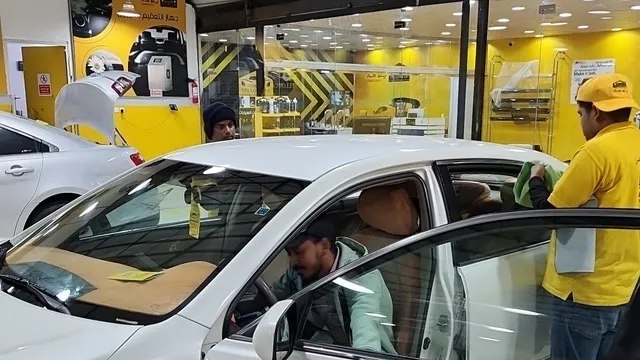
- Car park washers using one bucket and one cloth across many cars.
- Brush car washes straight after dust. The brushes carry sand from the cars before you.
- Running wipers over a dusty windscreen without enough water. The glass scratches and the blades wear out.
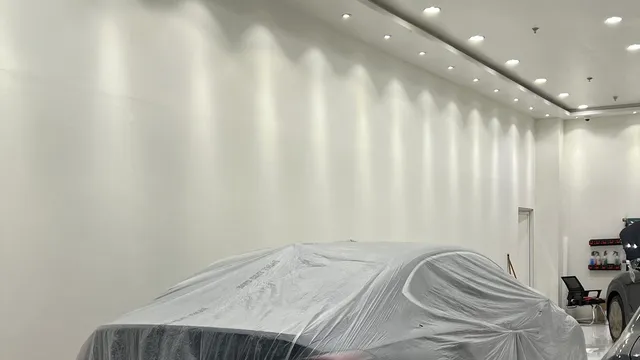
Car covers: help or harm?
A cover keeps dust off, but:
- If the car is dirty underneath, wind moves the cover and rubs the sand into the surface.
- A cheap, rough cover scratches by itself.
- In strong storms a cover can blow off or flap against the car.
If you use one, choose a cover that is soft on the inside, fits the car, and goes on a clean car.
Where film and coating make a difference
- Ceramic coating stops dust from clinging hard, so it rinses off faster.
- PPF absorbs some light scratching and heals with heat. It is also what takes the stone chips on highways in windy weather.
- Neither replaces washing the right way.
More on the effects of Saudi weather in car protection in the Saudi climate.
Bottom line
After dust: plenty of water first, little rubbing, dry straight away. That alone makes a big difference to how your car looks a year from now.
Want protection that makes washing easier? See ceramic coating shops and PPF shops in your city.